Why This Card Boom Is Different (And Dangerous)
This shift threatens the culture that made cards valuable in the first place.

When you click on links to various merchants on this site and make a purchase, this can result in this site earning a commission. Affiliate programs and affiliations include, but are not limited to, the eBay Partner Network.
“Mr. Wonderful” Kevin O’Leary and partners bought a 2007 UD Exquisite Kobe Bryant/Michael Jordan dual logoman patch auto for nearly $13 million this week.
That’s the highest a card has ever sold publicly, eclipsing the $12.6 million 1952 Topps Mickey Mantle sale in 2022.
It’s an astounding number for a sports card.
And The Hobby is in a weird place.
(I am going to capitalize it from now on as a proper noun for the card industry moving forward.)
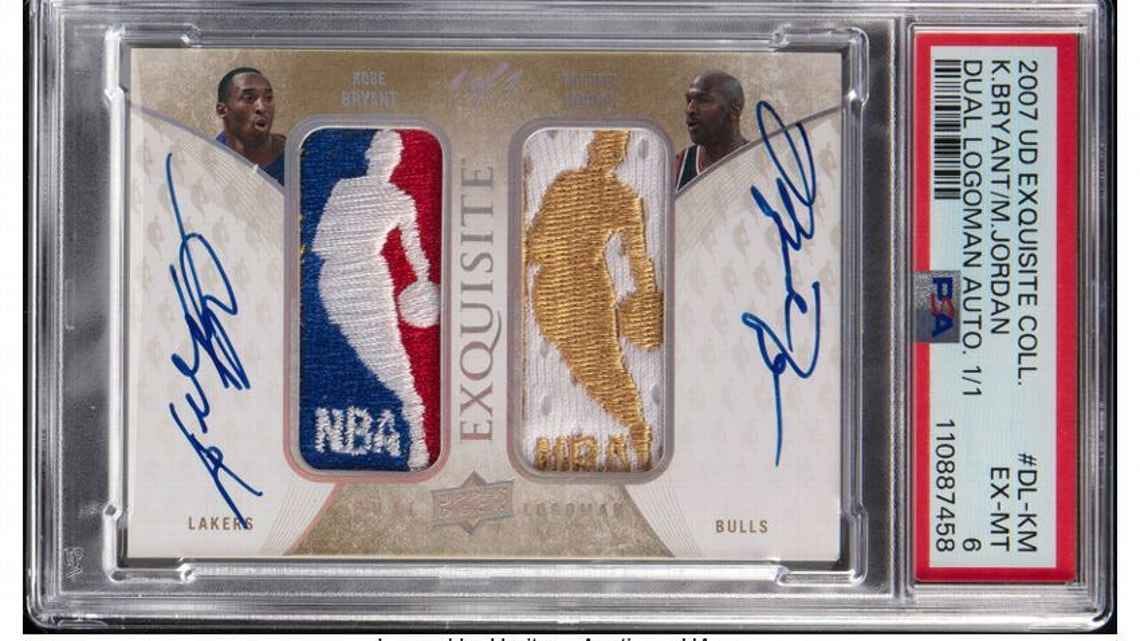
While some people find the sale of this card proves The Hobby is strong, I’m more hesitant. I have concerns and here are three reasons why:
Cards as Investments
Large companies and groups seem to be buying cards to use for investment purposes much more frequently than ever before.
Dick’s Sporting Goods bought the Paul Skenes MLB Debut Patch Auto for $1.1 million, effectively blocking everyday collectors from having a shot at the card.
During the Sotheby’s Fanatics auction in September 2024, I listened to some attendees discuss how their group owned the 2018 Topps Chrome Shohei Ohtani Superfractor Auto that sold for $336,000.
They bought the card with every intention of re-selling it for a profit. They have more cards in their portfolio.
Now, O’Leary and friends bought the MJ/Kobe card for a staggering price with an announcement attached to it that they formed a company to source rare cards, provide lending and engage in private sales.
Was it a giant marketing ploy? It sure looks that way.
Cost of Product
The cost of wax is too high for average collectors.
Just a few years ago, a box of Finest Baseball could be had for less than $200.
This year, a box of 2025 Topps Finest Baseball hit many hobby shops for about $500 with the price dropping to around $400 currently.
It’s surprising to think that prices have fallen for a baseball product, because there was a point where hobby shops couldn’t find enough products and now they are collecting dust on shelves.
More Sellers than Buyers
At a recent card show, I spoke to a few dealers who told me there were more sellers than buyers. The show was packed, but many attendees were looking to make a few bucks.
And they don’t want to take 80 percent comps anymore.
With the proliferation of repacks, it’s clear dealers need supply. Collectors have an advantage in this regard — and they’re realizing it.
Repacks are fueling the secondary market, in part, because many of them are more affordable than the cost of wax but with the same game of chance you would get from a sealed box of cards.
The Big Picture
The Hobby has had investors in it forever. The 1980s were big for this with collectors stashing away cases of cards for future college funds that generally didn’t pan out.
So, what makes this time different?
The type of money that is being spent now on cards can change entire markets, not just regular collectors speculating on a product like in the 1980s.
The junk wax era is coined because of the overproduction of cards. Today, card companies have created artificial scarcity with low-numbered parallels, limited editions and exclusives, all of which have helped cards retain and gain value.
Everything in The Hobby is more sophisticated with grading, authentication, digital marketplaces and more.
The Hobby is transforming more and more from a passion-driven community into a financial market. Cards are becoming commodities traded by investors rather than collectibles cherished by fans.
This shift threatens the culture that made cards valuable in the first place.
When cards become only investment vehicles instead of treasured collectibles, we lose the passion that gave them value in the first place.
The irony is that this new world could be weakening the very culture that made the cardboard worth millions to begin with.
This week’s releases
Baseball
2025 Panini Boys of Summer Baseball (August 27)
2025 Pulse Meridian Baseball (August 27)
2025 Pulse Meridian Baseball Heat Seekers (August 27)
2025 Topps Chrome Baseball Sapphire (August 27)
2024 Leaf Trinity Baseball Mega (August 29)
Basketball
2024-25 Panini Donruss Optic Choice Basketball (August 29)
2024-25 Panini Silhouette Basketball (August 29)
Football
2025 Panini Origins Football (August 27)
Hockey
2024-25 Upper Deck Clear Cut Hockey (August 27)
Other Sports
2025 Panini Select Racing (August 27)
2025 Topps Chrome WWE x Cactus Jack (August 29)
Non-Sports
2024 Topps Garbage Pail Kids Battle Of The Bands: Green Day (August 27)
James Bond 007 No Time To Die (Upper Deck) (August 27)
What you're saying is roundly true. However, while I agree that investors becoming more pervasive in the top end of The Hobby will almost certainly have some downstream impacts, I think it's important to consider that it's a very different kind of hobby when you're talking about cards in the five figures and higher.
No "everyday collector" ever had a chance of obtaining the Jordan/Kobe because the everyday collector doesn't have $10 million to spend on a card... or $10 thousand for that matter.
The other point about products being too expensive is the more important one, I think. We'll have to see how things all shake out.
Good piece.
I hate the phrase "The Hobby". Most people involved in the card industry arent in a "hobby" They're doing it to make money. And making money isnt a hobby. Its a business.
People use the phrase "The Hobby" to make it sound cute, and fun and nostalgic for the old days when we opened packs for the fun of it. When we collected our favorite teams, or players. Where we didnt worry about the "value" of the cards we got and whether it covers the cost of the box. Where we felt it was important for kids to have the ability to afford and collect cards.
Sadly, most people in "The Hobby" dont live in this world. They are in the card business. There are a lot fewer collectors than there was before. There are a lot more people who's only concern is making money and value and comps. There is no real "Hobby" anymore. And hasn't been for a number of years. There's been have's and have-nots for a long time. And this infusion of investors is neither good nor bad for "The Hobby"
There's nothing wrong with expensive boxes, flippers, breakers, repackers, investors. There's lots of different segments in the card industry and they all have their place. And people need to find their lane and do what they want to do and stop whining and crying about the segments they cant/wont/dont get involved in. Not everything is for everyone not should it be.
The card industry needs to quit calling it "The Hobby" as it does not describe the majority of the card industry of today.